Aaron Sorkin's 'Social Reckoning': A Necessary Critique or an Echo Chamber?
Aaron Sorkin's latest foray into the world of Facebook promises a timely exposé, but critics are divided on whether it delivers a fresh, urgent critique or merely echoes familiar concerns in an already saturated landscape.
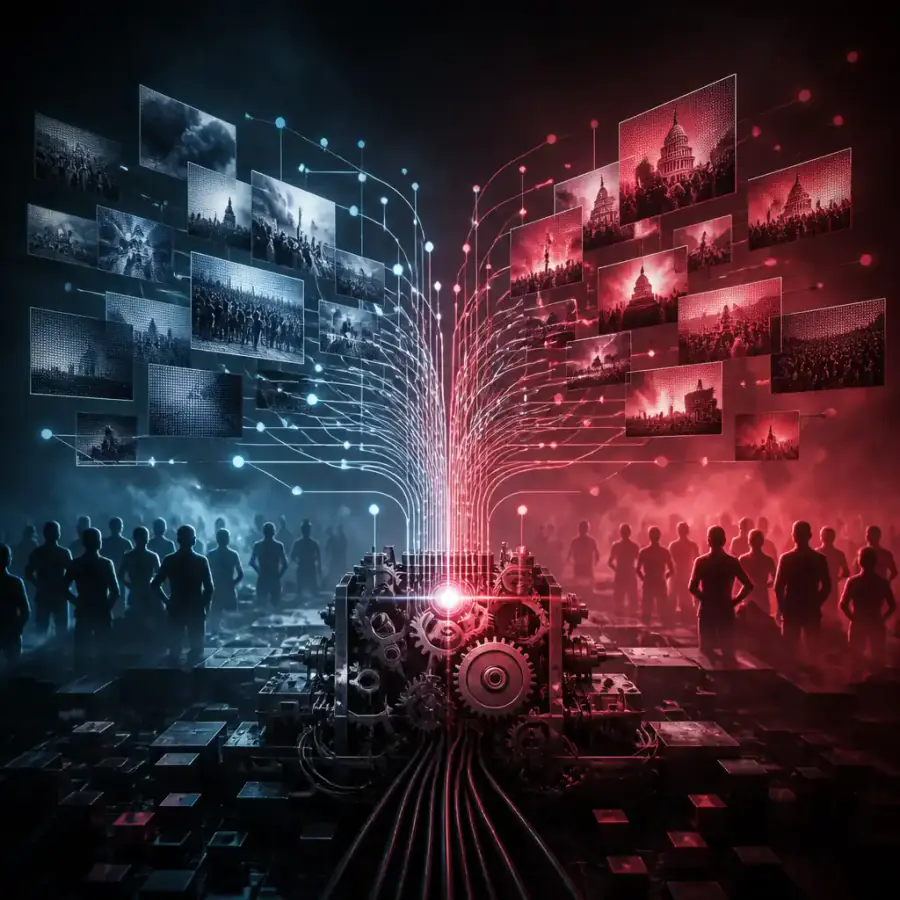
AI-generated image
Sixteen years ago, Aaron Sorkin's script for The Social Network captivated audiences by turning the creation of Facebook into a thrilling, Shakespearean drama. Now, with The Social Reckoning, Sorkin steps into both writing and directing roles, aiming to dissect the social media giant's darker impact, post-inception. But in an era where public skepticism towards big tech is already sky-high, does this new film offer a timely, incisive critique, or is it merely preaching to a choir that has heard it all before?
The film centers on Frances Haugen, a former Facebook data engineer, played by Mikey Madison, who becomes a whistleblower. She teams up with Wall Street Journal investigative reporter Jeff Horwitz, portrayed by Jeremy Allen White, to expose the company's internal research—known as the Facebook Files—revealing how algorithmic manipulations allegedly fueled extremism, misinformation, and had disastrous effects on society. Jeremy Strong takes on the role of Mark Zuckerberg, once again bringing the enigmatic founder to the screen as the film dramatizes events leading up to and beyond the January 6th Capitol riot.
The Shadow of a Masterpiece
One of the most immediate challenges The Social Reckoning faces is the formidable legacy of its predecessor. The Social Network, directed by David Fincher, won three Oscars, including one for Sorkin's Best Adapted Screenplay, and received eight nominations in total, making Facebook's early struggles surprisingly entertaining. This new effort, with Sorkin taking the directorial reins himself, inevitably invites comparisons. Critics note that while The Social Network focused on the creation of the platform, The Social Reckoning aims for a much broader story: the damage social media has inflicted upon the world, dramatizing how a whistleblower exposed the company's secrets. Yet, in many ways, it's perceived as a "smaller film" than its predecessor, lacking the dynamism that Fincher brought to the original and the compelling elements that made it a masterpiece, as observed by The Atlantic.
A Reckoning That Never Quite Arrives
Despite its ambitious premise, The Social Reckoning struggles to ignite the same spark. Jeremy Strong's portrayal of Mark Zuckerberg, while lauded by some as
No topics yet: start the first one.
More stories
Coppola's 'Megalopolis': A Flawed Vision for Cinema's Future?
Francis Ford Coppola's self-funded epic 'Megalopolis' embodies an uncompromising artistic vision that clashed with industry realities, ultimately finding an unexpected digital cult following.

Can 'The Mosquito Bowl' Tackle WWII Fatigue or Is It Just Another Playbook?
Netflix's new Peter Berg-directed WWII drama arrives with an intriguing true story and an all-star cast, but we question if it can offer a truly fresh perspective on a familiar genre.

Joe Manganiello's Battle: A Stark Reminder of Invisible Illness
The actor's candid revelations about his near-fatal autoimmune disease transcend celebrity gossip, spotlighting the hidden struggles and the desperate search for healing many chronic illness sufferers endure.

'NAZA': Automated warfare's chilling ethical abyss
The documentary 'NAZA' rips open the curtain on the disturbing reality of automated conflict, exposing critical questions about accountability that extend far beyond the immediate battlefield.