JustWatch TV: The Data-Driven Gambit Challenging Streaming's Status Quo
Leveraging its deep understanding of audience preferences, JustWatch TV is entering the crowded streaming market with a hybrid model, positioning itself as a disruptive force others might soon follow.
AI-generated image
The streaming landscape, once a promised land of endless choice and convenience, has devolved into a labyrinth of subscriptions, paywalls, and content fragmentation. We are constantly searching for where to watch a particular film or series, a problem so prevalent that services like JustWatch emerged to solve it by acting as a universal guide. Now, in a fascinating turn of events, JustWatch is no longer just pointing the way; it's entering the fray with its own platform, JustWatch TV, and doing so with a strategy that could radically redefine the streaming wars.
Set to launch in October 2026 across 12 markets, including the U.S. and Spain, JustWatch TV isn't just another service vying for our diminishing attention spans and wallet share [12, 23]. This new platform will operate on a hybrid model, offering over a thousand free ad-supported films, transactional rentals, and a premium ad-free subscription option [14, 16]. It's a bold move for a company previously focused on guiding users through the streaming maze, but one that positions it uniquely to capitalize on market shifts.
The Unfair Advantage: Data-Driven Curation
What truly differentiates JustWatch TV from the plethora of other new streaming services, such as the recently announced Recdek [5], isn't just its content library or its pricing model. It's the invaluable, proprietary data it possesses regarding user preferences. JustWatch, as a long-standing streaming guide [19, 20], has spent years observing what we watch, what we search for, and where we ultimately choose to stream it. This isn't just theoretical market research; it's a precise, granular understanding of audience demand across every major platform.
Imagine a streaming service built from the ground up, not on speculation or focus groups, but on concrete data showing exactly which titles are in high demand and where content gaps exist. JustWatch's September 2026 Streaming Charts, which detail the most in-demand movies and TV series, are a testament to this deep insight [2, 7]. This intelligence allows JustWatch TV to curate a library with surgical precision, potentially offering highly relevant content that genuinely aligns with audience desires, from classic films like Fritz Lang's 'M' and Buster Keaton's 'The General' that are streaming for free, to a growing selection from partners like Paramount and New Regency [1]. In a market where content discovery is often overwhelming, this data-driven curation could be its most potent weapon.
The Free-to-Play Gambit in a Saturated Market
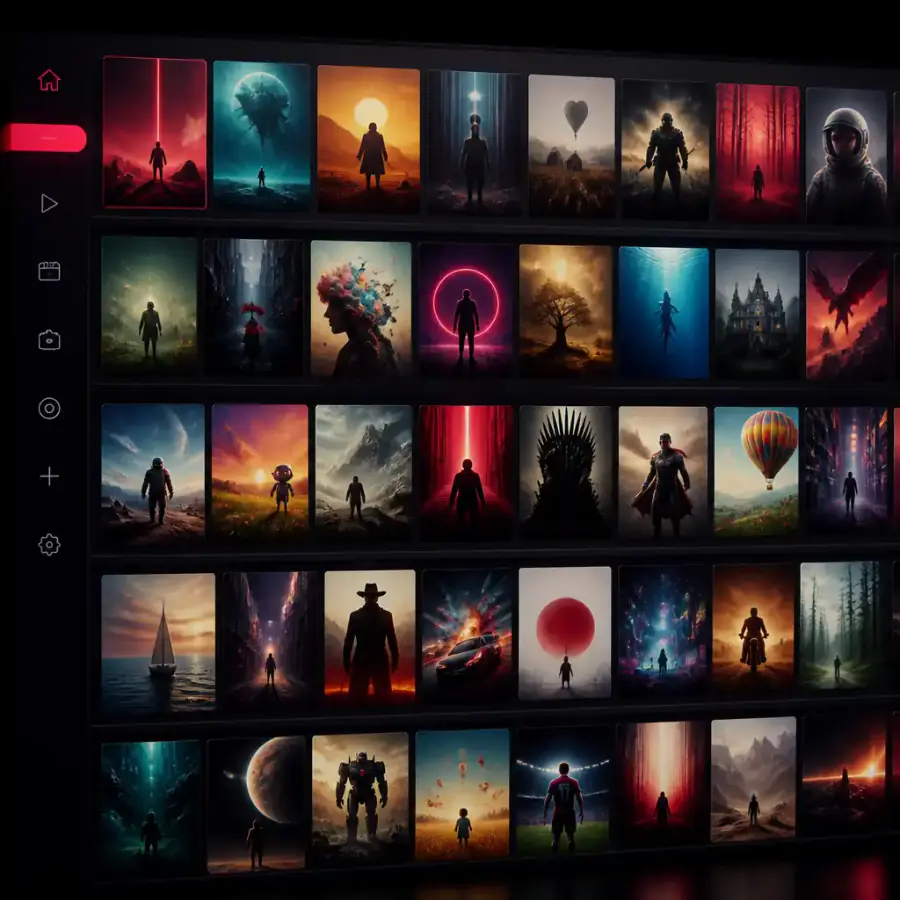
As the streaming market matures, ad-supported video-on-demand (AVOD) is proving to be a resilient model, attracting viewers fatigued by rising subscription costs. JustWatch TV's embrace of a free, ad-supported tier is not merely a pricing strategy; it's a recognition of the current economic realities and viewer habits. By offering a significant portion of its library for free, it lowers the barrier to entry, inviting curious users to explore its curated offerings without commitment.
This approach aligns with a broader trend of market segmentation, where services cater to distinct consumer segments. JustWatch TV aims to capture audiences seeking value and variety without the burden of another monthly fee, while still providing options for those desiring an ad-free experience or specific rentals. It's a pragmatic response to the growing fragmentation it initially sought to combat as a guide, now evolving into a direct competitor. This hybrid model could prove far more sustainable than purely subscription-based offerings struggling to retain users in a crowded field.
Reshaping the Streaming Ecosystem
JustWatch TV’s entry could force a recalibration across the entire streaming industry. Current giants like Netflix and Disney+, who have recently introduced their own ad-supported tiers, may find themselves facing a more agile and data-informed competitor. By launching initially in 12 markets, including key territories like the U.S., Canada, the UK, and Spain, JustWatch TV signals a global ambition [12, 23]. This move suggests that the company sees its extensive data as a universal asset, adaptable to diverse audience preferences worldwide.
Ultimately, JustWatch TV represents a significant evolution from a discovery tool to a content provider. Its strategy is not to outspend competitors on original content, but to outsmart them through superior content curation powered by unparalleled user preference data. This makes JustWatch TV a platform to watch, not just for its content, but for its potential to pioneer a more intelligent, data-led approach to streaming that could influence how future services are built and monetized.
No topics yet: start the first one.
More stories
ZDF Studios' Quiet Reign: Why Consistency Outperforms Netflix's Blockbuster Gamble
The German distributor's enduring 'SOKO' formula and smart syndication strategy offer a more sustainable blueprint for success than Netflix's high-stakes pursuit of fleeting original hits.

Netflix is all-in on thrillers: Is high-stakes drama the new path to streaming dominance?
With upcoming releases like 'Heartland' and 'El crimen de Pazos,' Netflix reinforces its strategy to captivate audiences with psychological thrillers and true crime, prioritizing immediate engagement over traditional critical acclaim.

A $110 Billion Gamble: The Skydance-WBD Merger Promises a Streaming Giant, But at What Cost?
The consolidation of HBO Max and Paramount+ into a single service under the newly formed Skydance will undoubtedly reshape the streaming wars, yet it raises critical questions about consumer prices, content diversity, and the future of Hollywood's workforce.

Disney+'s October Conundrum: Can Tentpoles Survive Technical Troubles?
As Disney+ rolls out high-profile content like 'VisionQuest' and 'The Kardashians' Season 8, its bid to diversify audiences faces a significant challenge from ongoing technical disputes impacting core viewing quality.