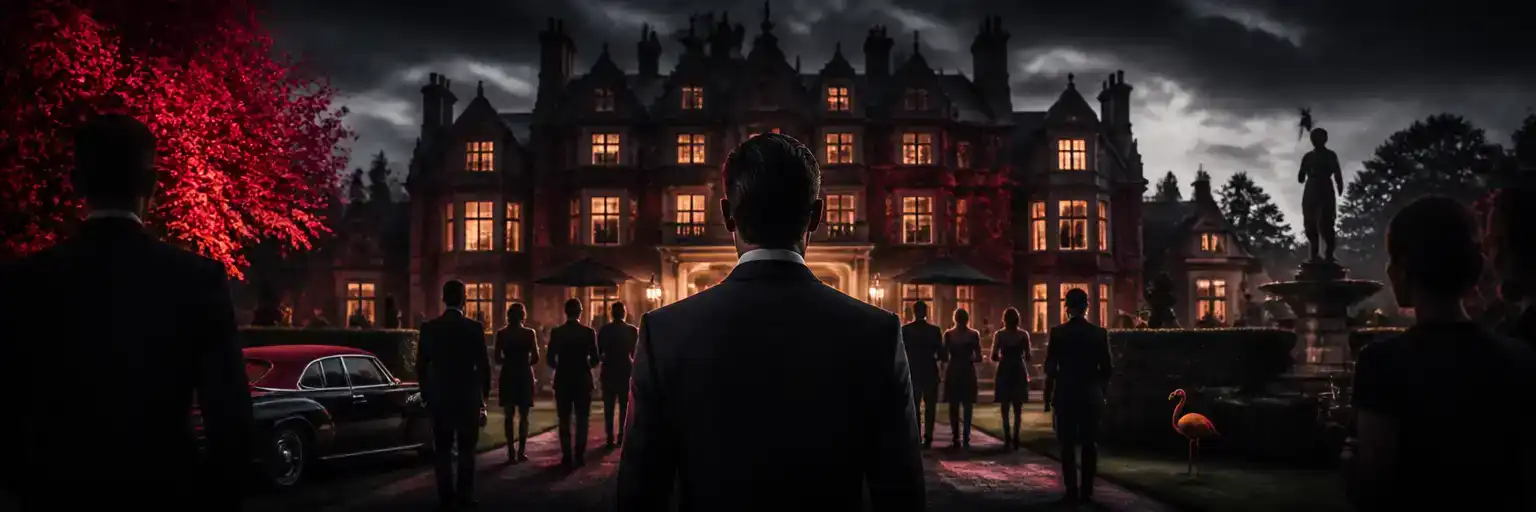
X Factor 2026 proves live TV still knows how to manufacture surprise
The talent show’s real product is not a future star but a shared moment: judges, switches and audience votes turning uncertainty into appointment television.
Photo: ITV, The X Factor / Wikimedia Commons (CC BY-SA 3.0)
What if the most valuable talent on X Factor is not the singer onstage, but the format itself? In 2026, the Italian edition remains less a search for the next breakout artist than a remarkably efficient machine for making uncertainty watchable. A performer sings, a judge hesitates, a chair becomes unstable, and suddenly a routine television segment has the suspense of a small public crisis.
The timing could hardly be more revealing. The Live Shows begin Thursday, October 22, on Sky Uno and in streaming on NOW, after the Last Call selected 12 contestants from 29 artists. The judges—Francesco Gabbani, Irama, Jake La Furia and Paola Iezzi—have three contestants each, while Giorgia hosts and has introduced an additional twist involving two unrevealed Škoda X Pass options that viewers will choose between. Sky reports that the Last Call episode reached a Total Audience of 858,000 viewers and a 4.2% share on its first Sky Uno airing, becoming the season’s new high.
The chairs are the show’s true special effects
The famous chairs-and-switches mechanism is not merely a rule. It is the format’s editing suite, suspense engine and moral argument all at once. Each judge builds a team of three, but every new performance can force someone already seated to stand up. That simple physical gesture turns taste into theater: the decision is no longer abstract, because the person being displaced is visible, present and often still processing the verdict.
This is manufactured spontaneity, but “manufactured” does not mean fake. The structure is openly artificial; the emotions need not be. The Last Call choices made that distinction especially clear. Giacomo Calò’s performance earned a place after Francesco Gabbani switched him in, while The Scraffs replaced Neyja in Gabbani’s team. Those moments work because the show gives disagreement a body. A chair is occupied. A chair is taken. Someone leaves the stage.
Streaming dramas can engineer cliffhangers with greater polish, but their suspense is usually locked inside a finished object. X Factor leaves room for judgment to look provisional. Even its format rules—unanimous cards at the Bootcamp stage, X Passes that can rescue or claim a contestant, then the narrowing pressure of three chairs—create the feeling that the episode might still escape its own plan. In our view, that is the show’s most durable illusion, and its most impressive craft.
The contestants matter because they resist being reduced to content
The 2026 lineup also gives the machinery something better than interchangeable material. Alice Fregoso arrives as a young multi-instrumentalist who performed David Bowie’s “Space Oddity.” The Scraffs bring a deliberately unruly band identity and played “Lonely Boy” by The Black Keys. Alìa, the stage name of Martina Cerutti, used Bishop Briggs’ “River” in the Last Call. These details do more than decorate the casting packages: they give the audience handles with which to remember people once the judging begins.
That matters because a talent show can easily turn performers into plot devices. A singer becomes “the one who was robbed,” “the surprise favorite” or “the contestant who cracked under pressure.” The stronger episodes allow the person and the narrative to compete. The Last Call coverage described performers who made mistakes, confused the judges or changed their minds about what they were capable of. That friction is more compelling than a sequence of immaculate auditions.
The apparent imperfection is therefore not a flaw to be edited away. It is the raw material of the event. When a contestant chooses the wrong song, loses control of a passage or suddenly reveals a side the judges did not expect, the program creates a question that cannot be answered by recommendation algorithms: what will this particular room decide now?
Live television wins when the audience becomes part of the argument
The most important distinction between X Factor and a polished streaming release is not visual quality. It is participation. The show asks viewers to track teams, interpret judge behavior, debate eliminations and, with the new X Pass twist, influence who may return. Sky’s figures also point to 408,000 Social TV Audience interactions in the linear measurement and 451,000 in the same-day 24/7 measurement for the episode—evidence that the program is functioning as a conversation as much as a broadcast.
Those numbers do not prove that every moment is thrilling, nor do they make the format immune to fatigue. A nearly three-hour Last Call can feel like a machine showing its gears. The more the show emphasizes switches, surprises and strategic reveals, the greater the risk that the contestants become secondary to the mechanics. A format built on uncertainty can also become predictable if every pause is stretched and every decision is sold as historic.
That is the challenge for the Live Shows. The program must demonstrate that its chaos is not just a pre-recorded illusion with a voting interface attached. The Last Call itself was recorded and edited rather than broadcast live, which makes the distinction especially important. The coming episodes need enough genuine consequence—performances that alter the hierarchy, votes that feel consequential and judges who do not simply repeat their established roles—to justify the appointment.
Its future depends on making the machine feel vulnerable
The smart move in 2026 is not to pretend that X Factor is spontaneous. It is to make the engineering visible while preserving the possibility of surprise. The switches, the team-building and the X Passes are the scaffolding; the audience returns for the moments when the scaffolding seems unable to contain what is happening.
That is why the show still matters. It does not defeat streaming at polish, convenience or narrative control. It competes on a different field: collective uncertainty. On Thursday nights, the question is not simply who sang best. It is who has become impossible to ignore, which judge will blink first, and whether the audience can change the story before the show closes.
Our verdict is clear: X Factor 2026 remains television’s best test of manufactured spontaneity, but only when it lets the manufacture fail a little. Watch the Live Shows if you want a shared event rather than another perfectly sealed release. The chairs are still the point—but only because, occasionally, someone sitting in them makes the whole machine wobble.
No topics yet: start the first one.
More stories
Glee Is Back—but Disney+ Can’t Just Sing the Old Hits
The Glee revival is a powerful nostalgia play, but its real challenge is deciding whether to repeat the formula or rewrite what the formula meant.

Baywatch Isn’t a Nostalgia Win Yet—It’s a Reboot Stress Test
The 2027 Baywatch revival has the red suits and slow motion, but its real challenge is proving the franchise still offers a reason to watch beyond remembering the beach.

Apple TV+ Should Bet on Strange Little Shows Like Where’s Wanda?
Where’s Wanda? season 2 makes the case that Apple TV+ can build loyalty not through global spectacle, but through sharply written local stories with unmistakable identities.

The Gentlemen Can Survive Without Freddy—but Not Without Its Chemistry
Daniel Ings’ exit is a creative stress test for Netflix’s Guy Ritchie franchise: replacing Freddy means proving the ensemble, not just the premise, can keep the series alive.